Table of contents
Medical Assistant Training: The Skills You Learn
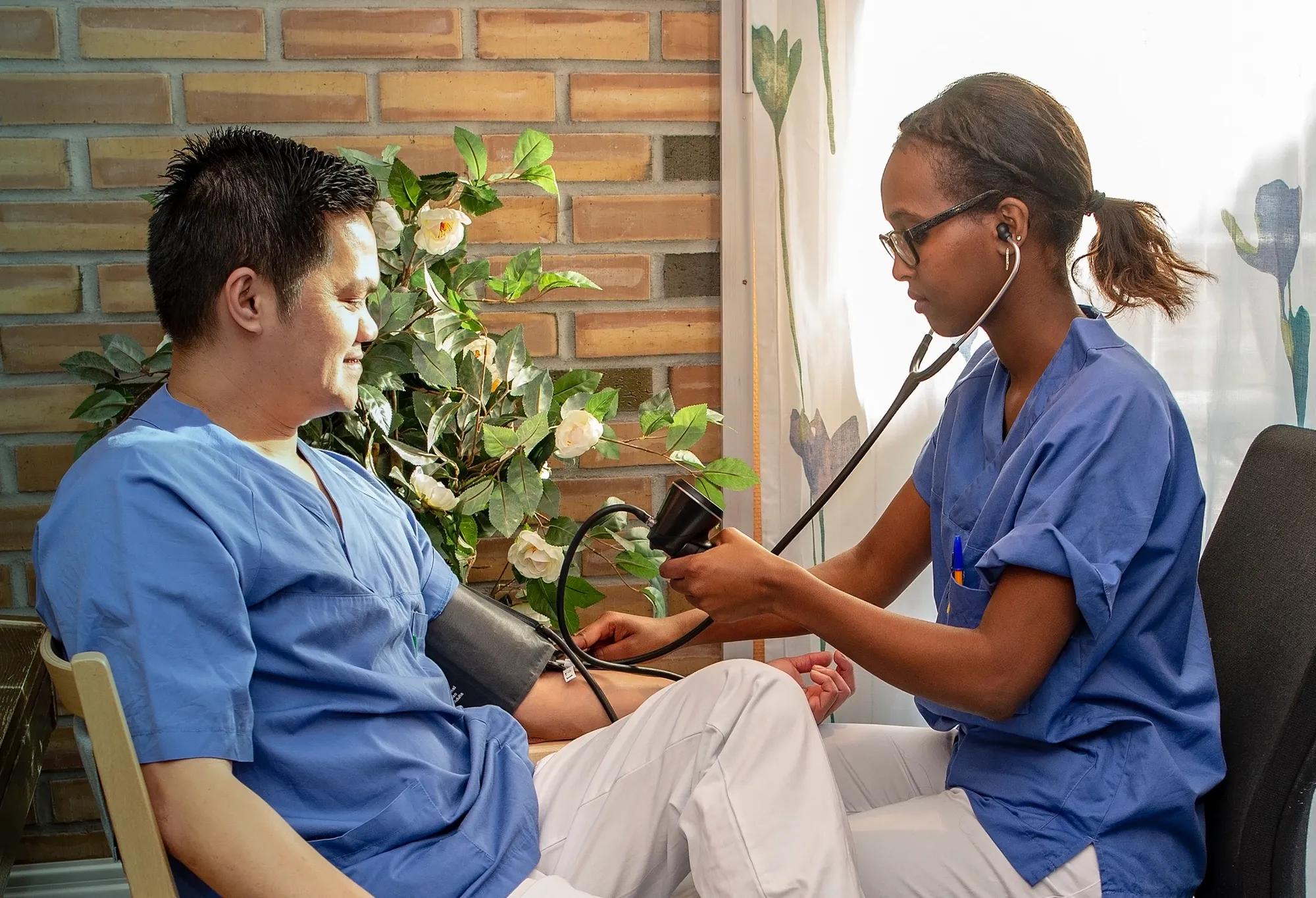
Table of Contents
Key Insights:
- Medical assistant occupations are projected to grow 12% between 2024 and 2034, a rate the Bureau of Labor Statistics calls "much faster than average," which could equate to roughly 112,300 job openings each year.
- Medical assistant training can provide skills for both clinical (patient care) and administrative functions, which are typical duties of this healthcare role.
- UMA's Clinical Medical Assistant program includes hands-on coursework, a 180-hour externship, and preparation to sit for certification exams.
Medical assistant occupations are projected to grow 12% between 2024 and 2034, which is a rate that is "much faster than average," according to the Bureau of Labor Statistics.1 This would equate to roughly 112,300 openings for this healthcare role each year, on average, during that time.
Medical assistant training can provide the skills needed to perform typical work duties, which often include both clinical and administrative tasks. What can you learn in a medical assistant program?
What Is a Medical Assistant?
Medical assistant duties can range from collecting vital signs and assisting with minor procedures to office duties such as updating patients' health records and scheduling future appointments.
Learn more: About the Medical Assistant Role
Medical Assistant Skills
The goal of a medical assistant training program is to prepare you for job duties that are typical for this role. These can include:
- Preparing patients for examinations
- Measuring their vital signs
- Collecting and preparing samples for testing
- Assisting physicians with examinations and minor in-office procedures
- Updating patient records
- Scheduling patient appointments
- Processing insurance claims
A training program can help you build these medical assistant skills and more. They're also some of the skills you may want to consider highlighting on your medical assistant resume once you are ready to begin your job search.
What You Can Learn in Medical Assistant Training?
Ultimate Medical Academy's Health Sciences – Clinical Medical Assistant Associate of Science / Associate of Applied Science Degree program includes several courses designed to provide the skills needed to work in ambulatory, urgent care, and acute care settings. Some courses within this program are intended to help build your technical medical assistant skills, while others can help you develop the soft skills that may be beneficial for this role.
This program covers:
Non-Clinical Medical Assistant Skills
- Medical terminology
- Teamwork and communication within healthcare settings
- Navigating electronic health record systems
- Medical billing and coding concepts
- Bookkeeping principles
Clinical Medical Assistant Skills
- Vital sign measurement
- Electrocardiogram (ECG) and cardiovascular assessments
- Specimen collection and lab procedures
- Basic pharmacology principles
- Emergency response
This program also includes a 180-hour onsite externship. This hands-on training helps you develop your medical assistant skills in an actual healthcare setting, with supervision.
Learners at UMA also receive preparation to sit for the Certified Medical Assistant exam, Registered Medical Assistant (RMA) exam, and Certified Clinical Medical Assistant (CCMA) exam.2 Some states/employers require that medical assistants be certified. Even if yours doesn't, obtaining a professional certification can enhance your credibility while also giving you a competitive advantage over job seekers who lack these credentials.3
Questions to Ask When Choosing a Medical Assistant Program
A degree program can help you gain the knowledge and skills needed to perform medical assistant job duties. Here are a few questions to ask when selecting a program:
- Does the program include courses that can help me build both my clinical (patient care) and administrative (office) skills?
- Does it help me prepare for certification exams?
- Is any of the coursework online, enabling me to complete some of my studies without having to commute to campus?
- Does the school offer student services if I am struggling in my program, have questions about a course or assignment, or face other school challenges when working toward my degree?
- Can anyone at the school help me navigate the financial aid process?
- What type of career services does the school provide, if any, for when I'm ready to begin my job search?
At UMA, we believe that it's important to find the right school for you. Asking questions such as these can help you learn more about your medical assistant training program options, in addition to considering some of the "extras" that schools sometimes provide, such as those related to academic and career services.
If you'd like to learn more about UMA, our programs, or services before making your decision, contact us and let's have a chat. We're here to assist you in your healthcare career educational journey.
1 Bureau of Labor Statistics. Occupational Outlook Handbook. Medical Assistants. Job Outlook. https://www.bls.gov/ooh/healthcare/medical-assistants.htm#tab-6
2 Learners must meet eligibility criteria to sit for applicable certification exams.
3 Indeed Career Guide. What Are Certifications? Definition, Benefits, Types and Examples, Benefits of certification. https://www.indeed.com/career-advice/career-development/what-are-certifications
4 Bureau of Labor Statistics. Occupational Outlook Handbook. Medical Assistants. How to Become a Medical Assistant. https://www.bls.gov/ooh/healthcare/medical-assistants.htm#tab-4
Frequently Asked Questions About Medical Assistant Training Skills
What do you need to be a medical assistant?
How do you become a medical assistant?
Is a medical assistant the same as an administrative medical assistant?
Request Information
Talk with us. Start your journey.
Complete this form and we'll call you to explore options at UMA and answer your questions. We'll also email you info on how to get started. We're with you at every step!
Request Information
Talk with us. Start your journey.
Complete this form and we'll call you to explore options at UMA and answer your questions. We'll also email you info on how to get started. We're with you at every step!
About the Author
 Christina DeBusk
Christina DeBusk is a freelance writer who has been providing health and wellness content to healthcare organizations such as the American Chiropractic Association and International Sports Sciences Association (ISSA) since 2011. She obtained her Bachelor of Science in Sociology from Central Michigan University, minoring in psychology. She has also earned several ISSA certifications, including Certified Personal Trainer and Certified Nutrition Specialist, achieving the status of Elite Trainer.
Related Content

What’s it Like to Be a Pharm Tech? A Day in the Life of a Pharmacy Technician
Read More