Table of contents
Allied Health Professionals Week: Ways to Celebrate and Show Appreciation
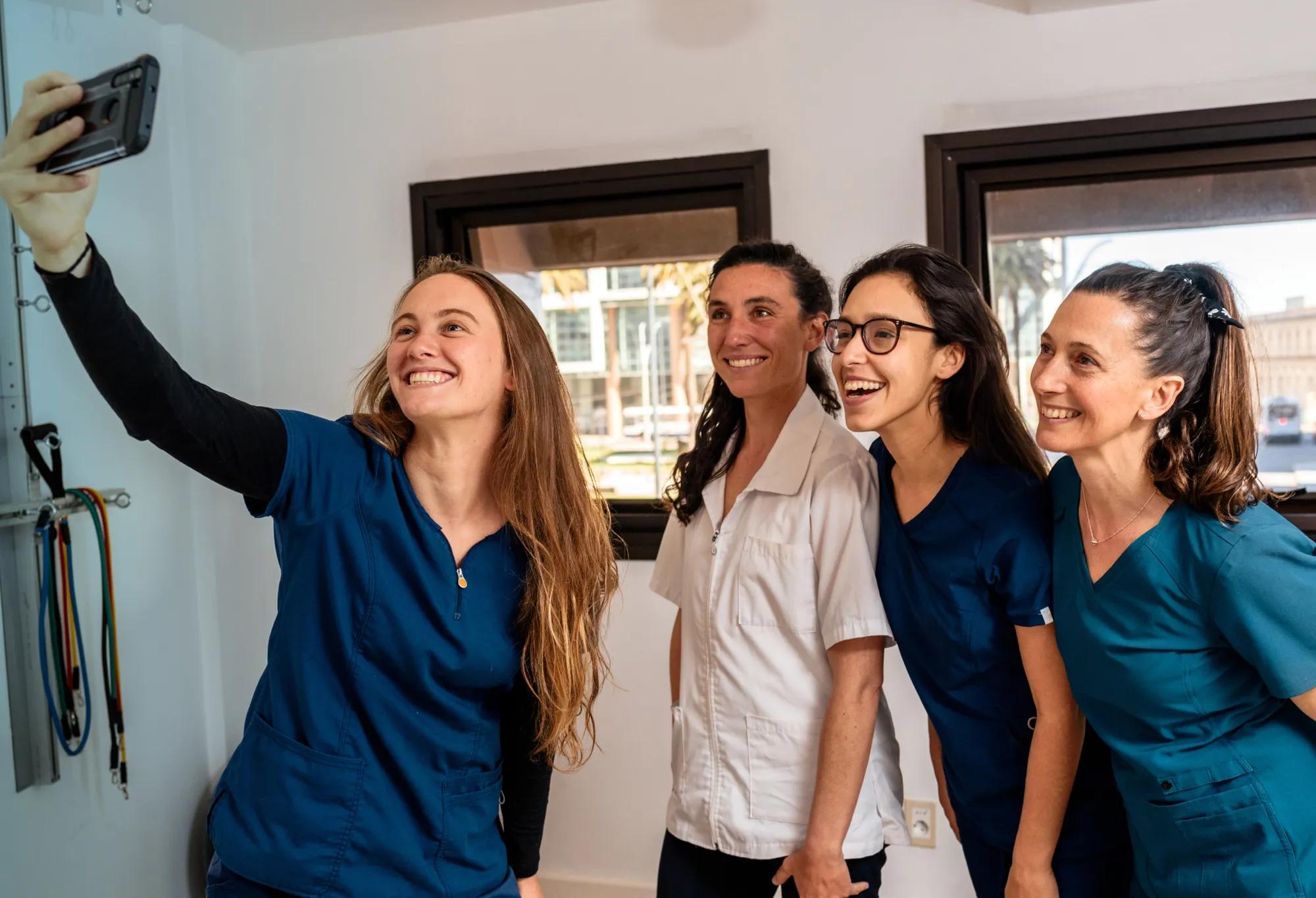
Table of Contents
Key Insights:
- Allied Health Professionals Week is the first full week of November each year and it provides the opportunity to celebrate healthcare workers in these professions.
- Creative ways to celebrate this nationally-recognized week include creating an “Allied Health Heroes” wall, taking a fun team photo for social media followers to caption, and coming together to support a good cause.
- If your interest in Allied Health Professionals Week stems from a desire to work in one of these roles, allied healthcare training programs can help you prepare.
Many amazing people work in the healthcare field. Some have the title of nurse or doctor; others make an impact through their duties in allied health roles. Every November, healthcare organizations across the country celebrate Allied Health Professionals Week to recognize these essential members of the healthcare team.
If you’ve ever considered working in healthcare but aren’t interested in becoming a nurse or physician, Allied Health Professionals Week is also a great time to explore these healthcare careers. Learning about the many roles in allied health can help you discover a career that could match your interests, strengths, and goals.
Allied Health Professionals Week: What and When It Is
Allied Health Professionals Week is celebrated during the first full week of November each year. During this week, healthcare organizations, educational institutions, and others come together to honor the people who support the healthcare system in allied health roles.
Also known as National Allied Health Week or National Allied Health Professions Week, this weeklong celebration gives us the opportunity to show our appreciation for individuals who’ve chosen to pursue an allied healthcare career path and work to help support the health and wellness field with care, empathy, and compassion.
What are allied health professions?
If you’re not familiar with the term “allied health professions,” these are roles in healthcare that are outside of nursing and medicine (e.g., physicians, pharmacists, and chiropractors). There are more than 200 distinct allied health professions, according to the Association of Schools Advancing Health Professions, and these individuals make up more than 60% of the U.S. healthcare workforce.1
Work settings for allied health professionals include medical practices, hospitals, outpatient care facilities, dental offices, urgent cares, insurance companies, and more. You can find these individuals in both clinical (direct patient care) and non-clinical (no direct patient care) healthcare roles.
These careers vary widely. Some involve direct patient care while others focus on technology, healthcare management, or managing the information that keeps patient care running smoothly.
Why Allied Healthcare Careers Matter
As an outsider looking in, it can be easy to think primarily of doctors and nurses when you hear the term “healthcare professionals.” These are the individuals we often have the most contact with as patients, so they may be at the forefront of our minds. But healthcare is a system, and allied health professionals are an important part of the team.
- Allied health professionals do important work. Whether you’re calming a nervous patient before a procedure, helping someone receive the medications they need, or ensuring accurate medical records, these professionals can make a meaningful difference in patients' lives each day.
- Allied health encompasses professionals who offer treatments outside of traditional medicine. It includes those who provide speech and language therapy, occupational therapy, physical therapy, and other non-drug-based treatment methods. Chiropractors, massage therapists, dietitians, and nutritionists are also allied health professionals who can help promote health and wellness in ways that don’t fall under traditional medicine.
- Healthcare requires a lot of behind-the-scenes work. Allied health roles that don’t involve direct patient care are just as important to health system function as clinical, direct care positions. These are all the people who ensure that medical records are complete and accurate, insurance claims are filed in a timely manner, and patients’ private health information is protected. By performing these tasks, they can help the healthcare system work effectively and efficiently.
- Some people want to work in healthcare but have no desire to go to school for years. Certain allied healthcare programs may be completed in 1–2 years, enabling these individuals to prepare to enter a field they are interested in without spending more time in school.
7 Creative Ways to Celebrate Allied Health Professions Week
If you’re looking for ways to honor allied health professionals at your workplace, here are some ideas to get you started.
#1: Create an “Allied Health Heroes” recognition wall
Set aside a space where patients, coworkers, and others can share their appreciation for the allied health professionals who’ve touched them personally. They could put a few words of thanks on a sticky note or card and affix it to the wall. Another option is to create a virtual “wall” on your website, which can be a good way to honor allied health workers who are remote or don’t report to a physical location.
#2: Spotlight these professions in external communications
Some people don’t know what an allied health professional is. During this week, educate clients and patients about these positions and why they are important to the healthcare system. You can do this in your newsletters, emails, and other external communications. Add interview snippets, fun facts, or short videos of the allied health workers in your office to show their personalities and make the communications more personal.
#3: Take (and post) a team photo
Sharing a team photo on social media can be a great way to showcase the diversity of these professions during Allied Health Professionals Week. Have fun with it by striking a creative pose, then get followers involved by asking them to caption the image. You could also post a team photo on your website to draw more attention to these roles or publish it in the patient newsletter to introduce others to the allied health professionals in your office.
#4: Play “guess the allied health profession”
Another way to help people outside your office better understand how different allied professions can be is with a fun, interactive game. On your social media page, post pictures of equipment or other clues, then ask which profession they belong to. For instance, you might post a blood pressure cuff for the medical assistant role or a pill counting tray for pharmacy technicians.
#5: Hold a friendly competition
What better way to draw attention to allied health heroes than with a little competition? Group different allied health professionals together and have them compete at trivia, charades, or another game (e.g., medical assistants vs medical administrative assistants). You could also have the different professions decorate a particular office space and let clients or patients vote on who did the best job. If your office is small or only has one or two allied health roles, ask other local healthcare organizations if they’d like to compete and turn it into a community-wide event.
#6: Give unconventional awards
During Allied Health Professionals Week each year, hand out awards for the individual in your office who always tells the best dad jokes, can fix anything that breaks, or has the biggest collection of healthcare-themed socks. Be creative. Let the allied health professionals in your workplace know that you see their uniqueness and love them for it.
#7: Support a good cause, together
In the end, allied health professionals may support healthcare in a variety of different roles, but they all work toward the same cause: creating a healthcare system that truly cares for the people who need it. One way to show this care is to support a cause as a unit. Sponsor a blood drive, walk to fundraise for charity, or collect canned and boxed items for a local food kitchen. Show the community that your heart extends beyond office walls.
Gift Ideas for Allied Health Professionals
You can also show gratitude for professionals in allied healthcare careers by giving them a small token of appreciation. Gift ideas include:
- Personalized tumbler
- Badge reel
- Compression socks
- Reusable lunch bag
- Self-care kit
- Portable phone charger
- Customized notebook
- Gift card to their favorite lunch spot or coffee shop
Are You Interested in Pursuing a Career in Allied Health?
Every allied health professional celebrated this week started somewhere. For many, that journey began with finding the right training program and support system.
If your interest in Allied Health Professionals Week stems from a desire to pursue a career in this field, UMA is here to help. Our caring and knowledgeable staff can help you decide if the allied healthcare field may be a good fit for you and/or discuss your program options, whether you’re interested in online allied healthcare programs or on-campus allied healthcare programs.
Whether you’re changing careers, returning to school after years away, or pursuing your first healthcare role, our team is here to support you every step of the way.
At UMA, we understand that adult learners can face challenges, especially when juggling school with home and work. Whether you have a question about a particular assignment, want to learn more about financial aid, which may be available for those who qualify, or would like help preparing for a job interview once you’re ready to pursue entering the field, we are here for you. We offer numerous student support and career services and can connect you with the appropriate team members.
Contact us to take the next step toward training to pursue a career in allied health. We’re here to talk about your career goals, answer questions about our degree programs, or discuss your challenges and how we can help you address them. Tell us what’s on your mind and figure it out, together.
1 Association of Schools Advancing Health Professions. What is Allied Health?, Health professionals beyond medicine & nursing. https://www.asahp.org/what-is
2 DeLuca, P.J. Ph.D. Allied health. EBSCO, Full Article / Definition. https://www.ebsco.com/research-starters/nursing-and-allied-health/allied-health
Frequently Asked Questions About Allied Health Professionals Week
What is allied health?
What is an allied health professional?
When is Allied Health Professionals Week?
Why is Allied Health Professionals Week important?
What is an allied health program?
Request Information
Talk with us. Start your journey.
Complete this form and we'll call you to explore options at UMA and answer your questions. We'll also email you info on how to get started. We're with you at every step!
Request Information
Talk with us. Start your journey.
Complete this form and we'll call you to explore options at UMA and answer your questions. We'll also email you info on how to get started. We're with you at every step!
About the Author
 Christina DeBusk
Christina DeBusk is a freelance writer who has been providing health and wellness content to healthcare organizations such as the American Chiropractic Association and International Sports Sciences Association (ISSA) since 2011. She obtained her Bachelor of Science in Sociology from Central Michigan University, minoring in psychology. She has also earned several ISSA certifications, including Certified Personal Trainer and Certified Nutrition Specialist, achieving the status of Elite Trainer.
Related Content

Professional Development Goals: Career Growth Ideas for Healthcare Professionals
Read More